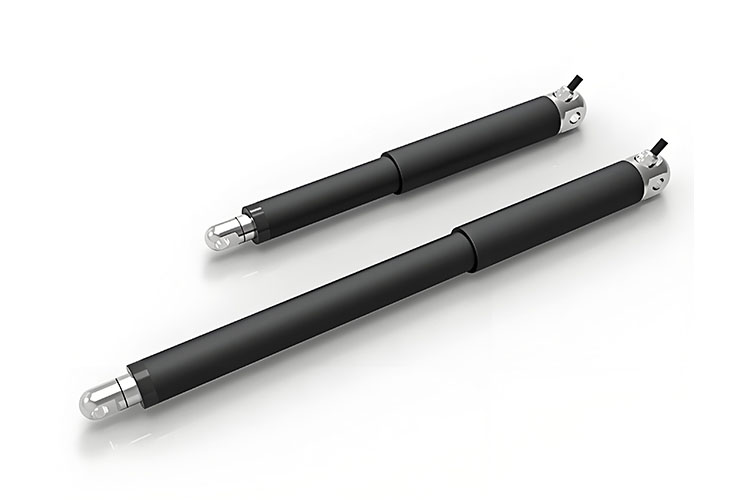
In modern industrial automation, three core technologies dominate linear motion applications: المحركات الخطية, أسطوانات كهربائية، و الوحدات الخطية. Each solution occupies a distinct position in the automation ecosystem, differentiated by structural complexity, application scope, and cost profile. Understanding these differences is essential for engineers and procurement managers seeking the optimal motion solution for their specific industrial requirements.
Market Share and Application Distribution
The global linear motion market is experiencing robust growth, with the overall linear actuator market valued at approximately USD 67.11 billion in 2025 and projected to reach USD 91.36 billion by 2030, growing at a CAGR of 6.37%. Within this expansive market, المحركات الخطية (particularly electric variants) command the largest share, capturing 52.54% of the market by actuation mechanism in 2024. Industrial automation specifically accounts for 28.53% of total linear actuator demand, making it the dominant end-use sector.
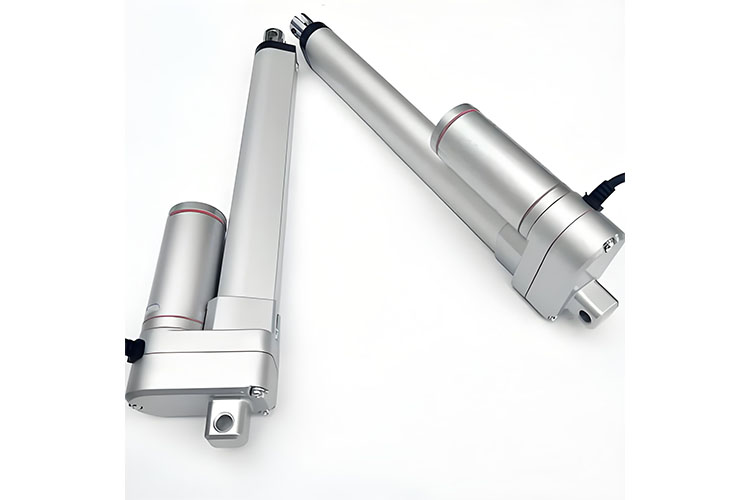
المشغلات الخطية—encompassing rod-style electromechanical units, lead screw, and ball screw configurations—represent the most widely adopted category. Their versatility spans from simple positioning tasks in conveyor systems to precision applications in medical devices and packaging machinery. The medium force capacity range of 2–10 kN controls 33.57% of market revenue, reflecting the prevalence of assembly, pick-and-place, and material handling applications.
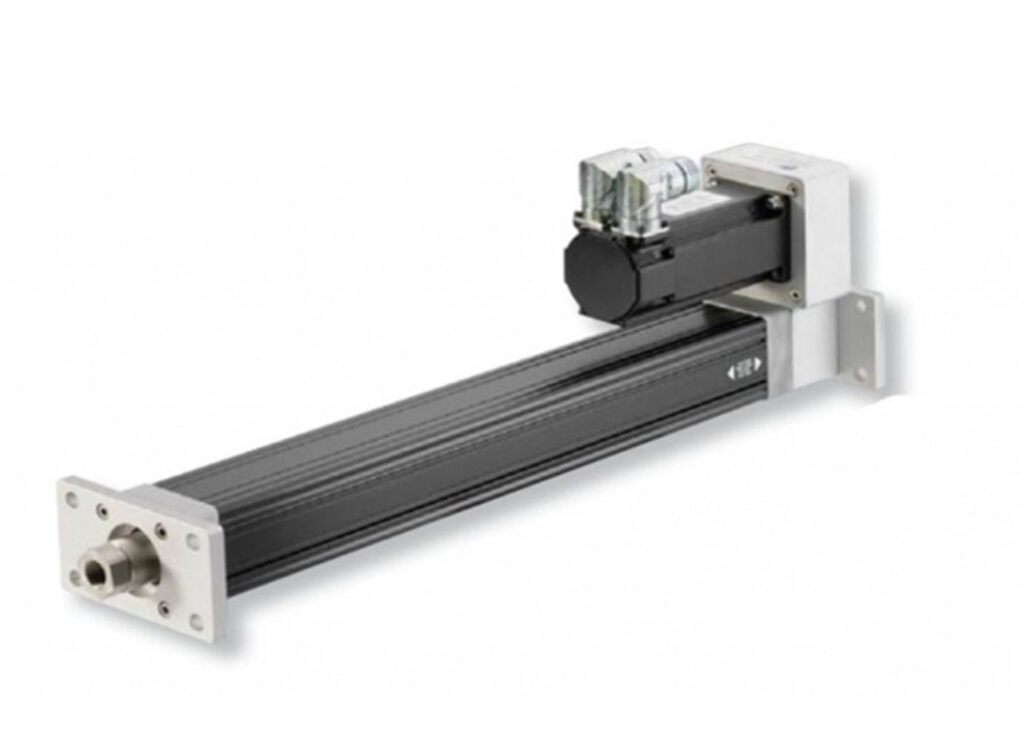
اسطوانات كهربائية, which integrate servo motors with precision ball or roller screw mechanisms in a self-contained housing, occupy a specialized but growing niche. These units are increasingly displacing hydraulic cylinders in applications requiring forces up to 25,000 N or more, with manufacturers like Thomson Industries and Tolomatic developing high-capacity models specifically for hydraulic replacement. While electric cylinders hold a smaller absolute market share than general linear actuators, they represent the fastest-growing segment in heavy-duty industrial automation, driven by sustainability mandates and Industry 4.0 integration requirements.
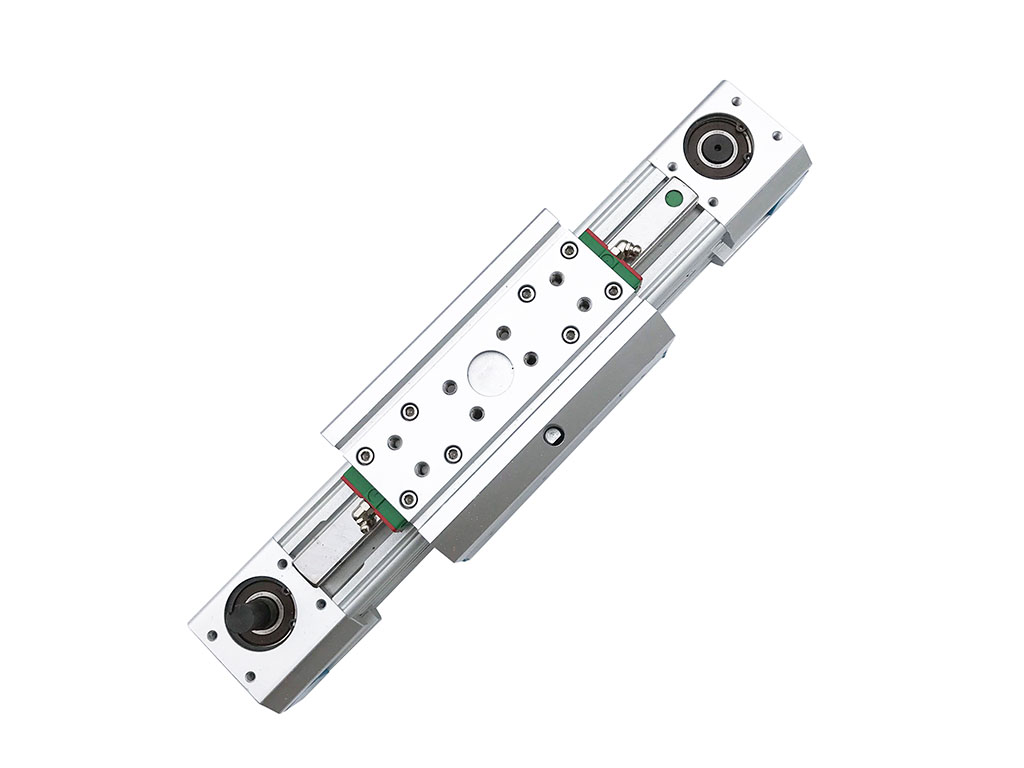
Linear modules—also known as linear stages or single-axis robots—incorporate linear guides, drive mechanisms (belt, ball screw, or linear motor), and structural frameworks into integrated positioning systems. These solutions dominate applications requiring multi-axis coordination, long travel distances (frequently exceeding 1,000 mm), and high-precision positioning in semiconductor manufacturing, CNC equipment, and automated inspection systems. While precise market share data for linear modules specifically is typically aggregated under broader linear motion categories, industry analysis indicates they represent approximately 15–20% of the electromechanical linear motion market, with particularly strong presence in Asia-Pacific manufacturing hubs.
Structural Complexity Comparison
The structural complexity of these three technologies increases progressively from linear actuators to linear modules.
المشغلات الخطية exhibit the simplest mechanical architecture. A basic electric linear actuator consists of a motor (DC brush, brushless, or stepper), a screw mechanism (lead screw or ball screw), a nut/carriage, and a guidance system. Rod-style actuators may incorporate simple sliding bearings or basic guide tubes. This streamlined construction results in fewer components, reduced assembly time, and compact form factors ideal for space-constrained installations. Advanced models may integrate position feedback sensors or basic controllers, but the fundamental mechanical complexity remains relatively low.
اسطوانات كهربائية introduce significantly greater mechanical and electronic complexity. These units integrate high-precision ball screws or roller screws with servo motors, encoders, and often onboard drive electronics within a sealed cylindrical housing. The manufacturing precision required for screw-nut assemblies, motor mounting alignment, and sealing systems substantially exceeds that of standard linear actuators. Additionally, electric cylinders frequently incorporate force sensors, temperature monitoring, and IO-Link communication capabilities for smart factory integration. The integration of these subsystems demands tighter manufacturing tolerances and more sophisticated assembly processes.
Linear modules represent the most structurally complex category. These systems integrate multiple precision components: linear guides (ball or roller type), drive mechanisms (ball screw, timing belt, or linear motor), structural aluminum extrusion frames, motor mounting brackets, cable management systems, and frequently multi-axis coordination interfaces. Belt-driven modules for long-stroke applications incorporate tensioning mechanisms, while ball screw modules require critical alignment between screw and guide systems. Linear motor modules eliminate mechanical transmission but introduce complex magnetic path design and thermal management challenges. The modular nature of these systems requires precise interface standardization and often includes protective covers, sensor mounting provisions, and drag chain integration.
Relative Cost Analysis
Cost structures across these three categories reflect their complexity gradients and application requirements.
المشغلات الخطية offer the lowest entry cost, with standard electric units ranging from approximately USD 50–500 for light-duty applications to USD 1,000–3,000 for industrial-grade ball screw variants. The cost efficiency stems from standardized production, minimal component count, and broad supplier competition. Maintenance costs remain low due to the absence of hydraulic fluids and the durability of electromechanical designs. However, when application requirements demand high precision or heavy loads, the cost gap between basic linear actuators and specialized alternatives narrows considerably.
اسطوانات كهربائية occupy the mid-to-high cost range, typically priced between USD 2,000–10,000 depending on force capacity, precision grade, and integration level. The premium reflects servo motor costs, precision screw manufacturing, and integrated control electronics. Despite higher initial investment, electric cylinders deliver favorable total cost of ownership through energy efficiency (approximately 57% system efficiency versus 30% for hydraulic equivalents), elimination of hydraulic infrastructure, and reduced maintenance requirements. For applications involving hydraulic system replacement, the elimination of power units, hoses, and fluid maintenance can offset the higher acquisition cost within 2–3 years.
Linear modules demonstrate the widest cost variation, ranging from USD 1,500 for basic single-axis ball screw stages to USD 15,000+ for high-precision linear motor systems with granite bases and environmental enclosures. Belt-driven modules for long-stroke material handling applications typically fall in the USD 2,000–5,000 range, while precision ball screw stages for semiconductor or metrology applications command significant premiums. The cost structure reflects the integration of precision guides, structural frameworks, and frequently custom engineering for specific stroke lengths or payload requirements. Multi-axis configurations combining multiple linear modules further amplify system costs but deliver coordinated motion capabilities impossible with standalone actuators or cylinders.
Selection Guidance for Industrial Applications
For engineers and system integrators selecting between these technologies, application requirements dictate optimal choice:
- المشغلات الخطية excel in simple push-pull applications, door/lid actuation, valve control, and basic positioning where moderate precision (±0.1 mm) suffices and cost minimization is prioritized.
- اسطوانات كهربائية provide optimal solutions for press-fit operations, injection molding, heavy-duty positioning, and hydraulic replacement scenarios requiring high force (up to 50+ tons in emerging designs), precise force control, and clean operation without hydraulic infrastructure.
- Linear modules are indispensable for applications requiring long precise travel, multi-axis coordination, high-speed positioning (belt drives achieving 5 m/s in warehousing applications), or sub-micron accuracy in semiconductor and inspection equipment.
The ongoing industrial trend toward electrification, sustainability compliance, and Industry 4.0 connectivity continues to expand electric linear motion technologies at the expense of hydraulic and pneumatic alternatives. As smart actuators with integrated diagnostics and IoT connectivity proliferate, the boundaries between these categories increasingly blur, with integrated solutions offering programmable force curves, predictive maintenance capabilities, and seamless PLC integration becoming the new standard across all three segments.