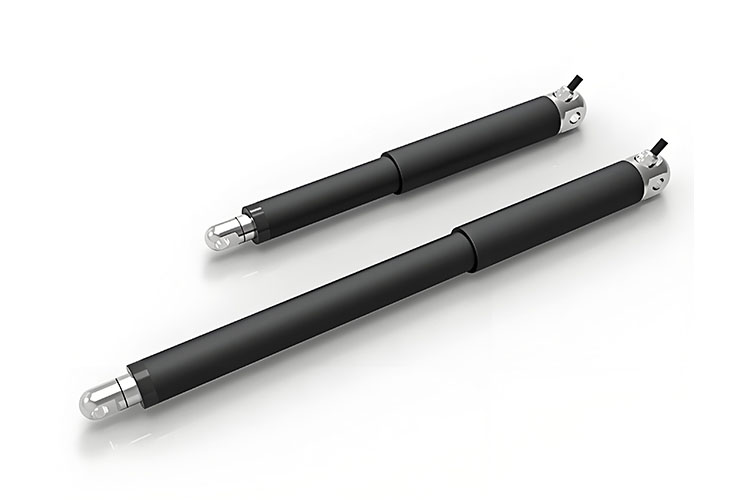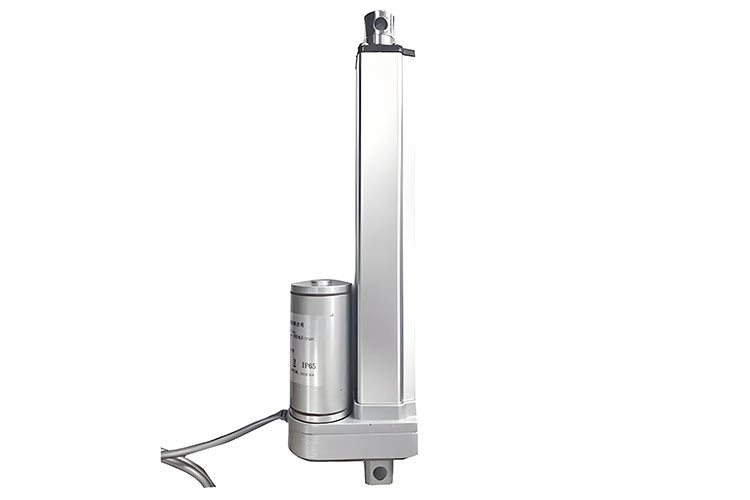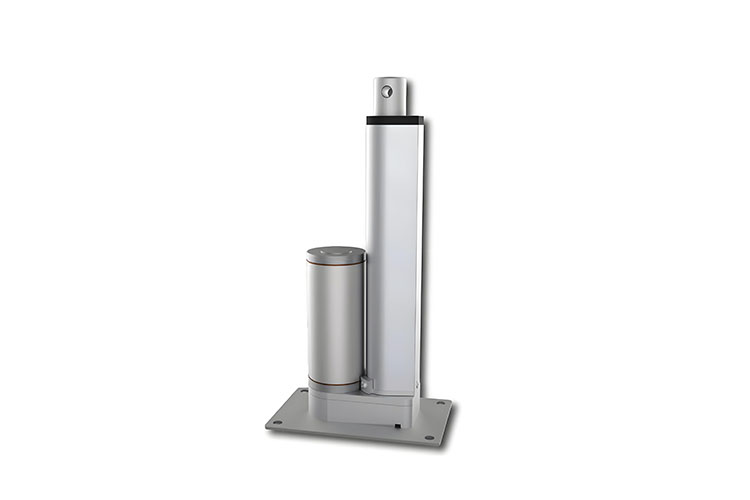
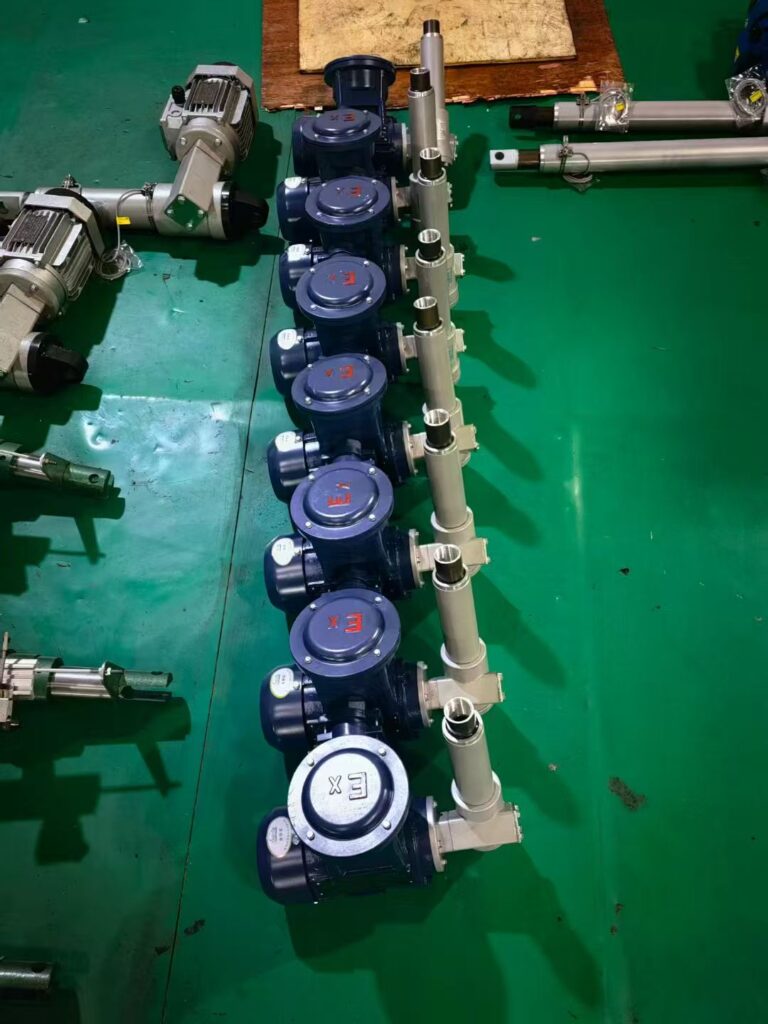
Our factory had an order from one of our customers about explosion_proof linear acatuators requirement.
It needs 7000N loading force, 20mm/s speed, and 800mm stroke length, but must be explostion_proof.
Some of our industrial linear actuators can be customized to explostion_proof.
Explosion-Proof Linear Actuators: Delivering Safe, Precised Moving in Hazardous Environments
Explosion-proof electric motors are well-known for powering rotating equipment in volatile atmospheres. However, in many industrial applications, the critical need is for safe, controlled linear motion rather than rotary force. This is where explosion-proof linear actuators (often called explosion-proof “push-pull” or “rod-style” actuators) come into play. These specialized devices integrate a sealed explosion-proof motor with a mechanical assembly that converts rotary motion into precise, reliable linear thrust. They are engineered to perform essential positioning, and lifting tasks where sparks or hot surfaces could trigger a disaster.
Important Design and Certification
An explosion-proof linear actuator is more than just a motor in a robust housing. It is a fully integrated system where every potential ignition source is contained. This includes:
- The Motor Compartment: Housed in a UL/ATEX/IECEx-certified enclosure designed to contain internal explosions.
- The Gearbox/Drive Mechanism: Often a sealed, oil-filled, or flame-path designed unit.
- The Lead Screw or Drive Rod: Where it passes into the motor housing, special seals and flame paths prevent hot gases or particles from escaping.
- Limit Switches and Feedback Devices: Potentiometers or encoders are housed within the explosion-proof system or are intrinsically safe.
These actuators are certified for specific Hazardous Area Classifications (e.g., Class I, Division 1, Groups C&D for gases; Class II for dusts) and Temperature Classes (T-codes) to ensure their surface temperature remains below the ignition point of the surrounding atmosphere.
Key Application Scenarios
1. Oil, Gas & Petrochemical Processing
- Valve Automation: The quintessential application. They provide fail-safe or modulating control for ball valves, gate valves, and butterfly valves on pipelines, processing vessels, and storage tanks handling crude oil, LNG, refined products, or corrosive chemicals.
- Damper & Louver Control: Precisely adjusting the position of explosion-proof ventilation dampers or louvers to regulate airflow, pressure, or temperature within classified areas.
- Sample Point Actuation: Automating the opening and closing of sampling valves on hazardous fluid lines, improving safety and consistency over manual operation.
2. Chemical & Pharmaceutical Manufacturing
- Reactor & Vessel Control: Positioning lids, hatches, or internal components (like agitator lifts) on reactors and mixing vessels that process flammable solvents or powders.
- Batch Process Automation: Safely moving slides, gates, or chutes in automated batching systems where combustible dust or vapors are present.
- Safety Shut-off Systems: Acting as the driving force for rapid-closing isolation valves or emergency vents (ESDs) as part of a safety instrumented system (SIS).
3. Mining & Material Handling
- Ventilation Control: Automating large explosion-proof regulator doors or curtains in mine shafts to manage airflow and isolate sections in an emergency.
- Dust Collection & Filter Systems: Actuating explosion-proof dump valves or cleaning mechanisms on baghouse filters handling combustible metal, coal, or grain dust.
- Bulk Handling Gates: Controlling the flow of material through hopper gates and diverters in silos, conveyors, and loading stations.
4. Marine, Offshore & Tanker Operations
- Cargo Handling: Operating valves for cargo transfer, ballast systems, and tank venting on LNG carriers, chemical tankers, and FPSOs (Floating Production Storage and Offloading units).
- Fire & Safety Systems: Controlling deluge system valves, fire door releases, or emergency shutdown mechanisms in engine rooms and cargo decks.
5. Wastewater Treatment & Biogas
- Digester & Process Control: Positioning weirs, gates, and slurry valves in anaerobic digesters where methane is produced.
- Biogas System Valves: Automating flow control on biogas collection and processing lines.
This project comes from customers of Oil, Gas & Petrochemical Processing .
Advantages Over Other Methods
- Safety & Compliance: Eliminates the risk associated with using standard actuators or pneumatic/hydraulic systems with potential leaks in hazardous areas.
- Precision & Control: Offers superior positioning accuracy, programmable stroke lengths, and speed control compared to traditional pneumatic cylinders.
- Reduced Infrastructure: No need for expensive compressed air lines (with dryers and filters) or hydraulic power units, simplifying installation and reducing energy costs.
- Reliability & Feedback: Electric systems provide inherent force limitation and can integrate position feedback for closed-loop control and diagnostics.
Conclusion
Explosion-proof linear actuators are critical enabling components for modern industrial automation within hazardous locations. They provide the essential link between electronic control systems and the physical, mechanical processes that must occur safely in Zones 0, 1, 2, 20, 21, and 22 (or Divisions 1 & 2). By delivering reliable, spark-free linear force, they not only protect personnel and assets from catastrophic explosions but also enhance process efficiency, repeatability, and integration with digital control networks. When specifying these actuators, a thorough analysis of the hazardous area classification, required force/speed, duty cycle, and environmental conditions (corrosion, temperature) is essential for selecting the right certified product for the job.
If you need any similar reuqirement, you can contact us directly.